
What Are Spiny Leaf Insects?
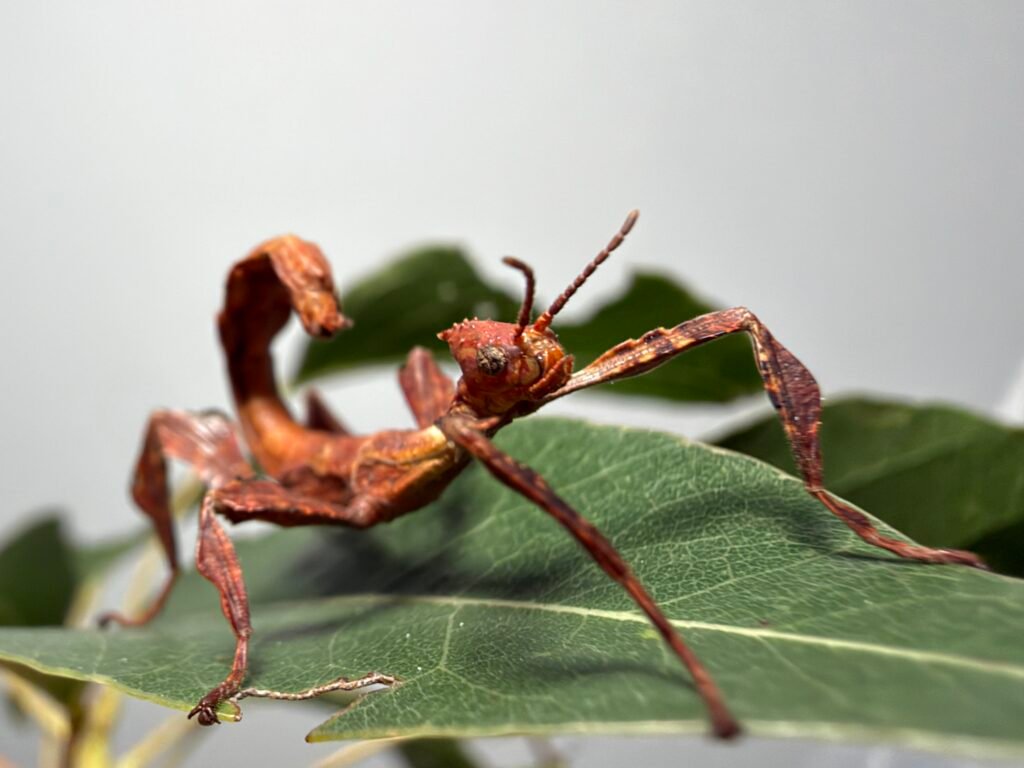
Spiny Leaf Insects (Extatosoma tiaratum), also known as Macleay’s Spectre, are Australian stick insects with incredible leaf-like camouflage.
Newly hatched nymphs look and move like ants. As they grow and moult, they develop their distinctive curled, leaf-like appearance. Adult females are large and spiny, while males are slimmer and have wings.
They are fascinating, low-maintenance pets when provided with fresh eucalyptus, a light daily mist and enough vertical space to moult safely.
Care Snapshot
🌡️ Temperature: Normal indoor room temperature, approximately 18–26°C
💦 Water: Lightly mist the foliage once daily
🌿 Food: Fresh, pesticide-free eucalyptus leaves
🏠 Enclosure: Tall, secure and well ventilated
☀️ Position: Bright indoor location away from direct sunlight and excessive heat
Enclosure & Setup
Spiny Leaf Insects need a tall enclosure because they hang upside down when moulting.
- A 30 × 30 × 30 cm mesh enclosure is suitable for small juveniles.
- A 30 × 30 × 60 cm mesh enclosure provides better long-term space and is recommended for a pair or as your insect grows.
- Allow approximately three times the insect’s body length of clear space beneath its usual hanging points.
- Position food branches so the insect can easily climb between the foliage, enclosure walls and roof.
- Use a small jar or bottle of water, to keep branches fresh (read below).
- Keep the enclosure away from direct sunlight, heaters, draughts, household sprays and curious pets.
Mesh enclosures are ideal because they provide ventilation and plenty of climbing surfaces. Check that small juveniles cannot escape through gaps around zips or doors.
Feeding & Water
Fresh eucalyptus – or gum – leaves should always be available.
Choose healthy foliage from trees that have not been treated with pesticides or herbicides. Avoid roadside trees, florist foliage and nursery plants unless you know they are chemical-free. Shake and inspect each branch for spiders, ants and other insects, and give them a good wash with fresh clean water before placing it inside your enclosure.
Different Spinies may prefer different eucalyptus species. If yours is not feeding, offer two or three safe varieties and check for fresh bite marks and droppings the following morning.
Place the cut branches in a small jar or bottle of water to keep them fresh. Completely cover the opening around the stems with a secure lid or foil so your insect cannot fall into the water and drown.
Replace the foliage before it dries out – usually at least once a week – and inspect every old branch carefully before disposing of it.
Lightly mist the leaves once daily to provide drinking droplets. The foliage should have small droplets without leaving the entire enclosure constantly wet. An open drinking bowl is not required.
Moulting
Spiny Leaf Insects grow by hanging upside down and shedding their old exoskeleton.
Before a moult, your insect may eat less, remain unusually still or hang in one position for an extended period. This is normally nothing to worry about.
Do not handle the insect, move its branch or clean the enclosure while it is preparing to moult. After moulting, leave it undisturbed for at least 24 hours while its new exoskeleton hardens.
If your insect falls during a moult or appears trapped in its old skin, do not try to pull the skin away. Contact us for advice.
Handling Your Spiny
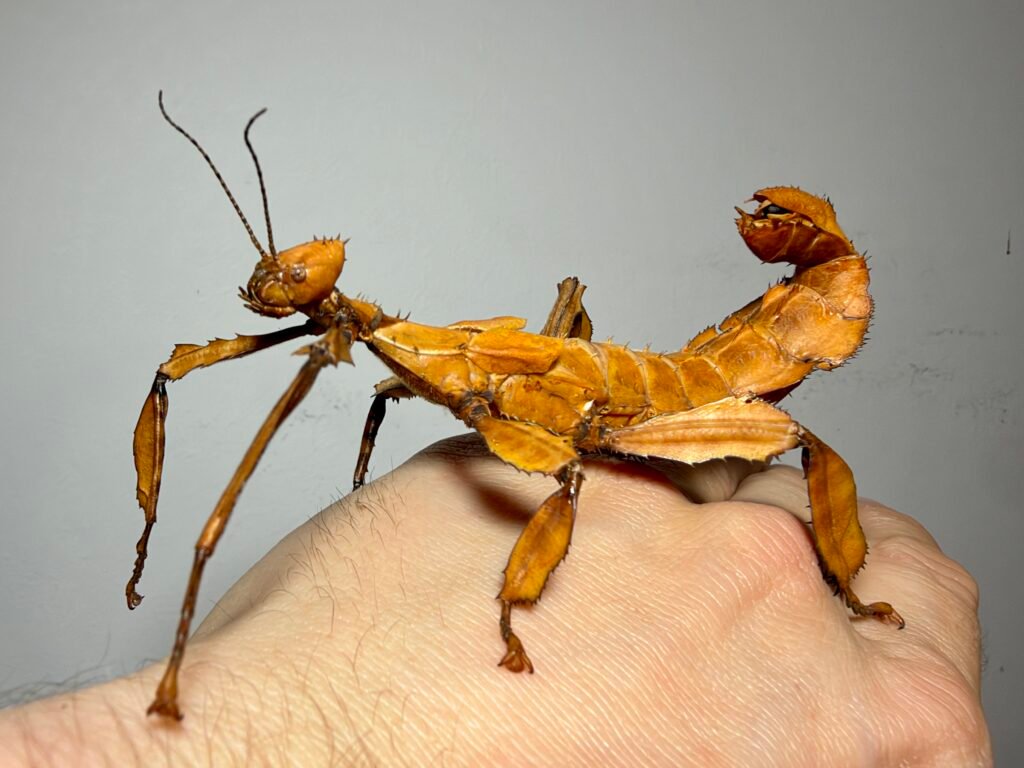
Allow your Spiny to climb onto an open hand or spare leaf. Gently encourage it from behind if required, but never pull it by its body, legs or antennae.
Keep handling brief, particularly with small juveniles, and never handle an insect that is moulting or has recently moulted. Keep doors and windows closed when handling adult males, as they can fly.
Spiny Leaf Insects are generally gentle, but adult females may grip with their spiny hind legs if they feel restrained. Children should always be supervised when handling them.
Cleaning
A bare enclosure floor or paper-towel lining makes cleaning easy.
Once a week:
- Remove droppings, fallen leaves and other waste.
- Replace the paper lining if used.
- Clean and refill the covered foliage container.
- Wipe dirty surfaces with clean water.
Avoid using household cleaning sprays or strongly scented products around the enclosure. Check all waste and old foliage carefully for insects and eggs before disposal.
Eggs & Hatchlings
Adult females drop or flick seed-like eggs onto the enclosure floor. They do not need to mate to produce viable eggs, although eggs produced without a male will develop into females.
To incubate the eggs:
- Keep them in a shallow, secure container with ventilation.
- Place them on clean paper towel or sand.
- Lightly mist approximately once a week without waterlogging the container.
- Check regularly for mould and replace the lining when needed.
- Keep them at a stable indoor room temperature.
Spiny Leaf Insect eggs can take many months to hatch, and they may hatch at different times.
New hatchlings are tiny and fast-moving. Transfer them with a clean, soft paintbrush or allow them to climb directly onto a leaf. Provide fresh eucalyptus immediately and ensure their enclosure is completely escape-proof.
Only incubate as many eggs as you can responsibly house or rehome.
Captive-bred Spiny Leaf Insects and their eggs must never be released into the wild.
🔗 More care guides: Care Instructions
💡 More detailed information: Care of Stick Insects – Australian Museum
✉️ Need help? Contact us and we’ll be happy to provide specific advice!
Leave a Reply