
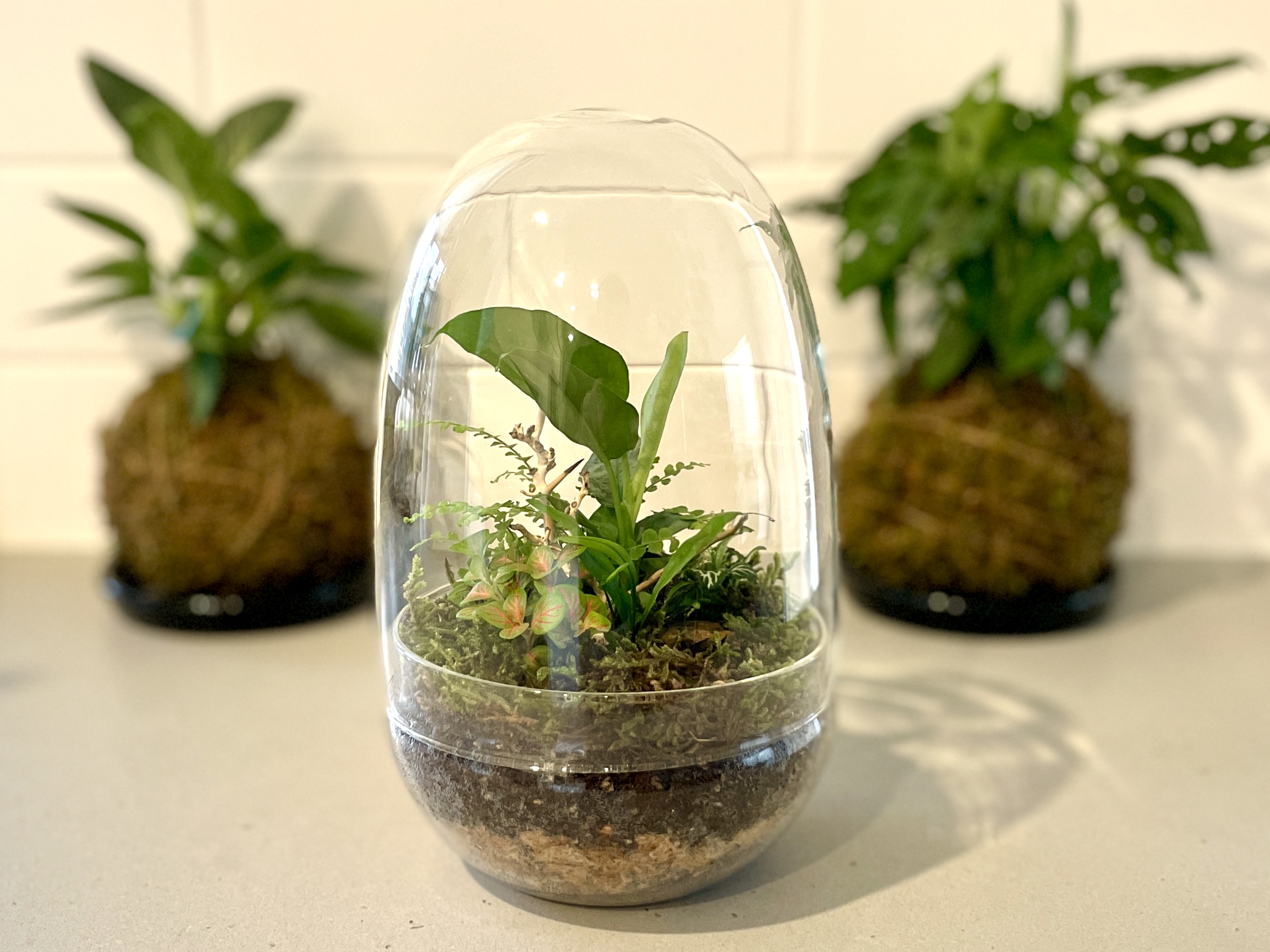
Terrariums are fascinating miniature ecosystems that work in harmony, providing a self-sustaining environment. But how exactly does a terrarium work?
The Closed System: Nature’s Own Miniature Ecosystem 🌍🔒
Imagine a little glass world where plants grow, water recycles, and everything works in perfect harmony. Welcome to the magic of terrariums! 🪴✨ These miniature ecosystems seem like tiny jungles trapped inside a jar, but how do they work? Let’s dive in and discover the fascinating science that keeps these little green worlds alive and thriving!
Water Cycle: The Miniature Rainforest 🌧️💧
Understanding how a terrarium works can help you maintain the ideal environment for your plants. Inside a terrarium, the water cycle works just like it does in nature. The water you add to the soil (or mist with a spray bottle 💦) will evaporate into the air inside the glass. Over time, this moisture condenses on the sides of the container and falls back down to the soil, just like rain in a rainforest! 🌧️ This cycle repeats itself, keeping the plants hydrated without needing regular watering. It’s like having your very own mini weather system! 🌦️
This self-sustaining cycle means you won’t need to worry about over-watering or under-watering. Your plants basically water themselves! 🌿
Photosynthesis: The Green Magic Behind Oxygen 🌞🌿
Just like the trees outside your window, the plants inside a terrarium use photosynthesis to thrive. During the day, plants take in light and turn it into food (glucose) through a process called photosynthesis. 🌞 This is how they grow, and it’s also the secret behind the oxygen they release.
At the same time, the plants take in carbon dioxide (CO2) from the air and release oxygen (O2) for us to breathe. That means your terrarium not only looks pretty, but it also helps purify the air – pretty cool, huh? 🌬️
Gas Exchange: A Plant Breathing Party 💨🌱
In a closed terrarium, there’s an ongoing gas exchange. During the day, the plants use carbon dioxide for photosynthesis and release oxygen. But at night, they reverse the process – taking in oxygen and releasing carbon dioxide, just like us. 🌙
So, while your plants are working hard during the day to provide fresh oxygen, they’re also contributing to maintaining the right balance of gases inside the terrarium. 🌬️ This process ensures the ecosystem remains healthy and balanced, just like a well-oiled machine! 🤖
Nutrient Cycling: The Circle of Life 🌱🔄
Terrariums don’t just have plants – they also have soil, and that soil is alive with microorganisms! 🌍🦠 These tiny helpers break down organic matter (like dead plants or fallen leaves) into nutrients that the plants can absorb.
As plants grow, they naturally release nutrients back into the soil, which helps the ecosystem thrive. So, when a leaf or stem dies off, it’s not wasted – it becomes food for the soil’s microbes, which in turn nourishes the plants. 🌿🍃
This nutrient cycling is what keeps your little glass garden going strong without needing to add fertiliser or worry about plant food. Nature does all the hard work! 💪
Humidity Control: A Perfect Climate Inside Your Jar 🌡️💨
One of the coolest things about a terrarium is how it controls its own humidity. Since the water evaporates, condenses, and rains back down, the air inside the terrarium stays at a perfect humidity for the plants. 🌾 This is why terrariums are often a great home for plants that thrive in tropical conditions, like ferns, moss, and fittonia. 🌴🌿
The glass walls help trap moisture, creating a humid environment that keeps plants happy and healthy. It’s like living in a tropical rainforest without having to leave your living room! 🏠
Terrarium Magic: Why Does It Work? ✨
So, what makes all of this work together so seamlessly? The key is balance! Terrariums are like tiny, miniature versions of the Earth itself – everything inside works together in a closed loop. The plants, soil, air, and water all interact to create the ideal environment for growth. 🌍🌿
By mimicking nature’s processes – like the water cycle, gas exchange, and nutrient cycling – terrariums create a healthy, self-sustaining ecosystem that doesn’t need much help from us. 🌱 The best part? Once you set it up, your terrarium is mostly on autopilot! 🚗
Conclusion: The Tiny Jungle You Can Enjoy Anywhere! 🏞️
Now that you know how a terrarium works, you can appreciate the magical science that makes these miniature ecosystems thrive! From the water cycle 🌧️ to the oxygen they release 🌬️ terrariums are a tiny piece of nature you can bring into your home. Whether it’s on your desk, your shelf, or as a gift for a friend 🎁 they’re a fun, educational, and low-maintenance way to enjoy the wonders of nature.
Ready to watch your little green world thrive? 🌱✨
Leave a Reply